


Hyung-mo Koo, CEO of FOCUS AI: “Leaping Forward as a ‘Physical AI’ Company That Moves Reality”
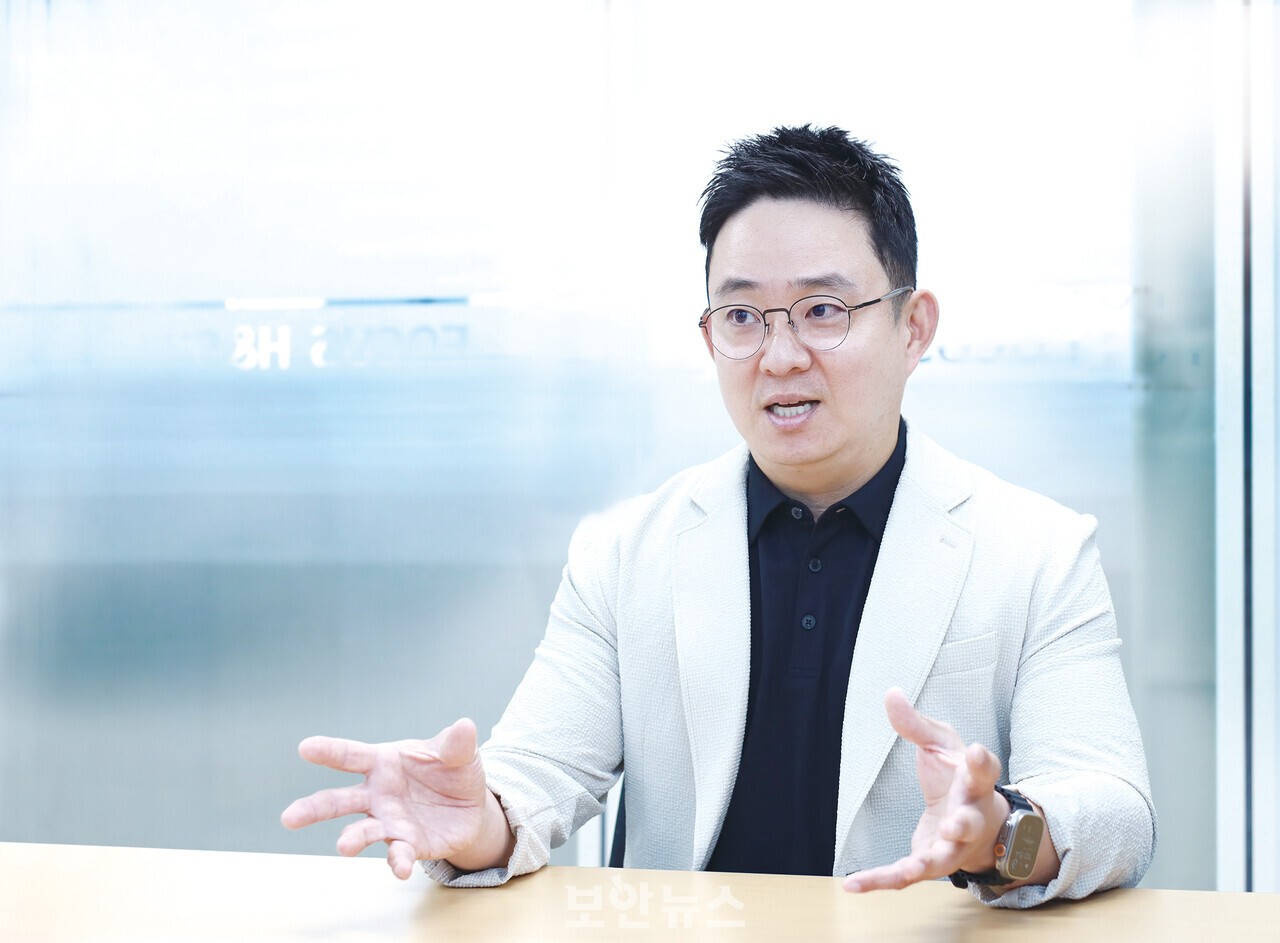
The traditional CCTV video security market, long limited to simple surveillance and after-the-fact review, is reaching a major inflection point. As artificial intelligence (AI) technology advances, video is evolving beyond mere recorded data into core infrastructure that predicts on-site risks and supports real-time decision-making. Amid this industrial transition, a new CEO with a background in strategic planning at a global consumer packaged goods (CPG) company took the helm of FOCUS AI this April. Immediately after taking office, he redefined the company’s identity from a “CCTV manufacturer” to a “Physical AI platform company,” aligning the organization, technology, and business direction. From winning first place in a competition affiliated with WACV 2026, a leading computer vision conference, to advancing the industrial safety solution for Samsung Heavy Industries, we asked about the innovation and future vision FOCUS AI is building under its new leadership.
Q. Please introduce FOCUS AI.
Many people know FOCUS AI as an AI CCTV company, but we do not define ourselves as a mere manufacturer of video security equipment. Cameras are sensors that collect data from the real world, and AI understands that context in real time. Our ultimate goal is to make industrial sites run more safely and efficiently. FOCUS AI is a “Physical AI platform company” that lets physical spaces See, Understand, and Act. By connecting cameras, AI, edge computing, and server technology into a single platform, we are leading digital transformation in fields such as industrial safety, smart cities, manufacturing, and logistics.
Q. You took office as CEO this April. What changes have you led over the past four months?
When I heard I had been appointed CEO, I did not think “I just need to run the company well.” I thought “we need to redefine the company.” If the company has so far been known for video security equipment, I judged that going forward it must be recognized in the market as a Physical AI platform company that solves real-world problems. So over the past four months, I focused on direction rather than short-term numbers. Before changing the organization, I first established what kind of company we will become, and I integrated technology development that had been scattered across individual products into one organic platform. We put all our effort into firmly establishing the company’s identity so that we remain an indispensable company in the market five or ten years from now.
Q. Your background at a global consumer packaged goods (CPG) company stands out. What perspective does experience in a different industry bring to managing a traditional security company?
Having long overseen B2C and B2B business and strategic planning at a global consumer goods company, the absolute principle I learned is to “do the right thing for customers.” The same applies to the security industry. What customers truly want is not camera hardware but a “safer site,” “efficient operations,” and “real-time accident prevention.” With a “beginner’s eye” that is not trapped in past success formulas, I am asking new questions of the industry’s inertia. My management philosophy is to aim to be a company that solves customers’ fundamental problems, rather than one that stops at making CCTV with better image quality.
Q. It seems FOCUS AI’s core competitiveness will also change under the new CEO.
Our greatest competitive edge is not the “technology” itself but our “perspective on problems.” While the existing market has focused on camera image quality, video storage, and simple analysis rates, we have built an integrated AI platform that sees the world (See), understands the situation (Understand), and connects to real action (Act). AI cameras, AI servers, AI NVRs, Ultra Low Latency video transmission (ULL), and the Slot-based Gateway Edge Server (SGE) are not separate but organically connected to solve on-site problems. We believe FOCUS AI’s differentiated competitiveness lies in the execution capability to turn AI technology into real customer value, rather than simply being a company with a lot of AI technology.
Q. Last July, you took first place in an international AI challenge. What does this mean?
This competition is the “Physical Retail AI Challenge,” held in connection with WACV 2026, a leading computer vision conference, where research institutions and companies around the world compete on AI video analytics performance in real retail environments. FOCUS AI ranked first in the world in the Retail Action Track 3 category with our own AI model, “PASTEL.” This result was achieved by precisely analyzing interactions between customers and products based on real store data, not on the ideal conditions of a laboratory. More important than the ranking is that this technology does not end in the lab; combined with CCTV, AI NVRs, and intelligent control systems, it can be applied immediately to smart retail and industrial safety sites. It was an opportunity to objectively prove that AI has gone beyond “seeing” video to “understanding” the field. We are taking one more step and focusing on implementing Physical AI that makes real industrial sites run more safely and efficiently. In doing so, we will continue to secure international technological competitiveness while working to connect that technology to products and services that customers can feel.
Q. How do the recently acquired core technologies, Ultra Low Latency video transmission (ULL) and the intelligent edge server (SGE), differ from existing technologies?
Ultra Low Latency video transmission (ULL) minimizes the chronic latency of network cameras. It serves as the communication foundation for next-generation Physical AI, including precise PTZ control, industrial safety monitoring, and remote robot control, and it relieves peak network traffic load. The intelligent edge server (SGE: Slot-based Gateway Edge Server) mounts multiple slots in a single gateway server, integrating NVR recording, parking control, and heterogeneous services into one device. It provides complete failover between slots, dramatically lowering hardware and maintenance costs. If past AI was a technology that recorded and stored video and then “looked” at what had happened, our technology builds a structure that understands what is happening now and responds immediately. ULL transmits on-site data in real time, and SGE connects it so that decisions and actions can be made on site instantly.
Q. What results is the ISMP (Infra Safety Monitoring Platform), the integrated safety monitoring platform built with Samsung Heavy Industries, achieving on site?
ISMP implements a structure in which cameras and sensors see the site (See), AI understands hazardous situations (Understand), and the necessary actions are triggered (Act), clearly showing a real-world application of the Physical AI that FOCUS AI pursues. The Samsung Heavy Industries site is a high-risk workplace where numerous heavy machines and workers are mixed in a vast space. FOCUS AI built ISMP to manage equipment locations, travel routes, remaining fuel, and whether authorized personnel are on board in an integrated manner. By linking AI cameras, thermal imaging, and various on-site sensors, it continuously analyzes dangerous proximity between workers and heavy equipment, signs of fire, and intrusion into hazardous zones. The biggest achievement is that it has shifted monitoring from the “after-the-fact review” of replaying CCTV after an accident to a “real-time prevention” system that detects warning signs first and alerts immediately.
Q. What do you see as the biggest recent change in the security market?
The “security” industry itself is evolving into the “Physical AI industry.” Video is no longer just for recording; it has become core data that supports real-time decision-making on site. Another trend is that the center of AI computing is moving from the cloud to the “edge,” close to the site. How quickly you can recognize, judge, and connect to action on site will be the deciding factor. Security going forward will not be an industry that simply watches, but one that actively moves. FOCUS AI aims to be the Physical AI company that realizes this change first.
Q. What are your flagship products for the second half of 2026 and your market roadmap for 2027?
In the second half, we plan to complete the development of an integrated “AI Server” that combines AI Box and NVR functions and to expand our lineup of 36-channel and 64-channel high-performance embedded recorders. I also believe industrial safety will be one of the fastest-growing markets. At manufacturing plants, shipyards, logistics centers, power plants, and construction sites, demand is rapidly increasing for AI that prevents accidents and improves operational efficiency, rather than systems that merely store video. We plan to expand our Physical AI platform centered on these industrial sites. In 2027, we aim to bring generative AI and vision-language models (VLM) into full use, realizing a next-generation monitoring environment in which operators can search video in natural language and AI summarizes and suggests key risk events. Beyond fragmented competition between products, our goal is to build an “open Physical AI platform” in which various sensors, robots, and software work together organically, creating an ecosystem where customers can extend functions as needed. We will lead the market not as a company that makes good cameras, but as an AI platform company that understands physical space best.
Q. How is FOCUS AI performing in global markets, and what is the strategy going forward?
We have consistently supplied recorder products to the U.S. market for more than ten years, and our credibility is growing further in line with the China-Free trend. Recently, the response from the Japanese market has been especially strong. Beyond simply purchasing finished products, we are conducting PoCs and joint technology development with major local buyers, and we expect to sign a main contract within the year and begin large-scale supply from 2027. The key to overseas business is not short-term sales but “trust.” Through technology and quality, we will make “Made in Korea” a symbol of accuracy and trust in the global market.
Q. What goals and vision do you most want to achieve during your term as CEO?
I want to firmly establish FOCUS AI not as a mere CCTV company but as Korea’s leading “Physical AI platform company.” Beyond external growth, I will build a stable, profitable virtuous cycle in which technology development leads to business results. For customers, I want to be the most reliable partner who solves on-site problems together, not just an equipment supplier. When my term ends, I will do my best so that FOCUS AI is remembered not only as a company whose sales grew, but as a company that firmly established its identity and built a sustainable future.